Unlocking Precision in Aerospace with AS 9100 Certified Machining Services
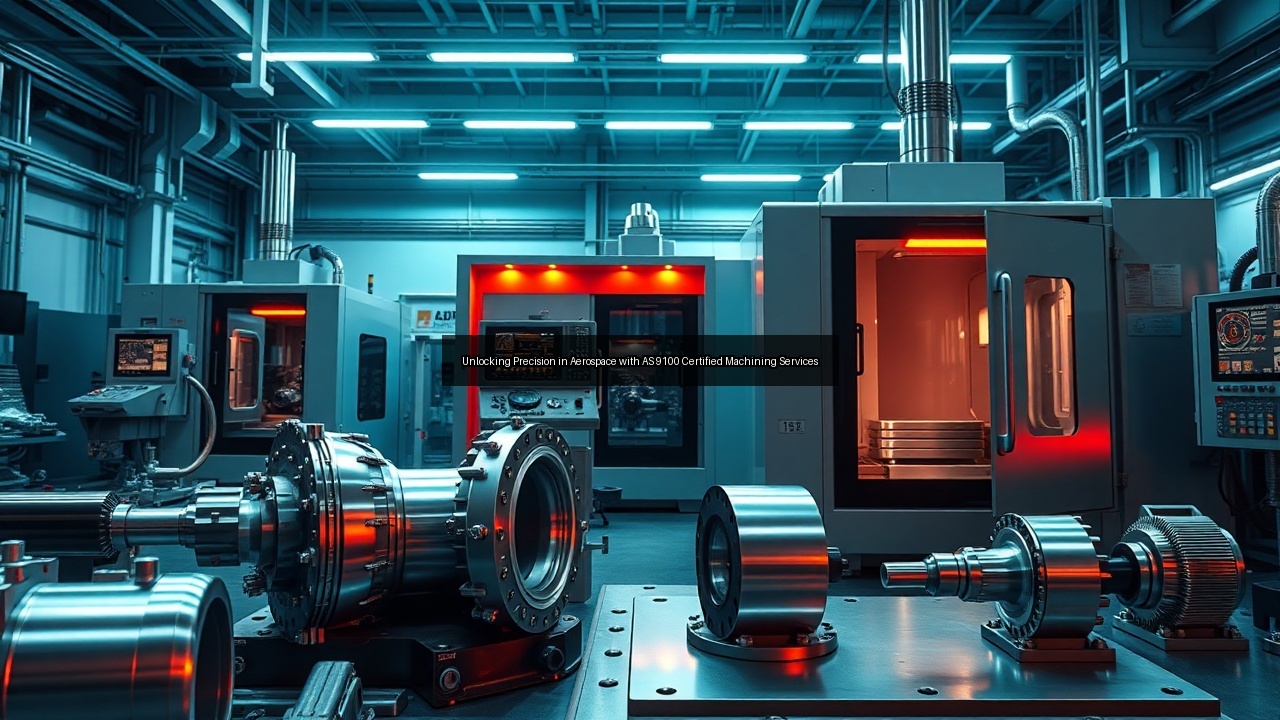
Understanding AS 9100 Certification in Aerospace Machining
What is AS 9100 Certification?
AS 9100 certification establishes a rigorous quality management framework specifically tailored for aviation, space, and defense sectors. It builds directly on ISO 9001 requirements while adding strict controls for configuration management, product safety, and counterfeit parts prevention. Companies pursuing as 9100 machining services for aerospace must demonstrate consistent process discipline across every stage of production. Auditors examine documentation, training records, and risk mitigation procedures to verify compliance. This standard demands traceability for all materials and components, ensuring that every machined part meets exact specifications without deviation. Manufacturers integrate these rules into daily operations to support reliable output for critical applications like engine components and structural assemblies.
The standard originated in 1999 as a collaborative effort between aerospace industry leaders and organizations such as the International Aerospace Quality Group to address gaps in general manufacturing quality systems exposed by high-profile incidents. Beyond basic ISO 9001 clauses on leadership and continual improvement, AS 9100 incorporates additional requirements including operational risk management, human factors considerations in process design, and mandatory first-article inspection protocols under AS9102. Traceability extends to raw material heat lots, with full chain-of-custody records required from mill to finished part. Facilities must also implement robust counterfeit parts prevention programs that include supplier approval processes, incoming inspection techniques such as X-ray fluorescence testing, and secure handling procedures to isolate suspect items immediately.
Importance of AS 9100 in Aerospace Manufacturing
Aerospace manufacturing operates under extreme performance demands where even minor defects can compromise flight safety. AS 9100 certification signals that a facility maintains disciplined processes capable of delivering parts with tight tolerances repeatedly. Airlines, defense contractors, and OEMs require this credential before awarding contracts because it reduces the likelihood of failures during assembly or operation. The standard forces teams to address human factors, equipment calibration, and supplier oversight systematically. As a result, certified providers strengthen overall industry trust and enable smoother collaboration across international programs involving commercial aircraft and helicopter platforms.
Without such rigorous certification, the risk of in-service failures rises dramatically, as evidenced by historical cases where inadequate process controls led to component fatigue or dimensional mismatches. Certification also streamlines compliance with customer-specific quality mandates from entities like Boeing, Airbus, and the Department of Defense, reducing redundant audits and accelerating qualification timelines. In an environment where a single grounding event can cost operators millions per day, AS 9100 provides documented evidence of systemic reliability that directly supports airworthiness certification efforts under FAA and EASA regulations.
Key Benefits of AS 9100 Certification
Certified shops gain measurable advantages through improved internal management and external recognition. They experience fewer production interruptions because preventive actions catch issues early. Clients benefit from predictable lead times and documented quality records that simplify regulatory audits. Access to new markets expands when buyers filter suppliers by certification status. The framework also encourages continuous improvement cycles that lower scrap rates and elevate first-pass yields on complex geometries. Over time these gains compound, allowing facilities to scale aerospace machining services without sacrificing precision or compliance.
Quantifiable improvements often include 20-30 percent reductions in nonconformance reports within the first two years of certification, driven by disciplined root-cause analysis and corrective action tracking. Suppliers also report enhanced employee engagement because standardized work instructions reduce ambiguity during complex setups. Externally, certification serves as a powerful marketing differentiator in competitive bids, frequently acting as a prerequisite for tier-one supplier status and enabling participation in global programs such as next-generation narrowbody aircraft or satellite constellation hardware.
Precision Machining Techniques for Aerospace Components
CNC Machining: The Backbone of Aerospace Production
CNC machining drives the majority of high-volume aerospace parts because it delivers repeatable accuracy across intricate contours and deep cavities. Multi-axis centers perform simultaneous milling and turning operations that reduce setups and maintain alignment. Programmers optimize tool paths to achieve required surface finishes while preserving material integrity. This approach supports rapid iteration during prototyping and seamless transition to full-rate production. Facilities running advanced CNC equipment routinely hold tolerances measured in microns on structural brackets, landing gear fittings, and turbine blades.
Modern implementations integrate advanced CAM software with real-time adaptive machining that adjusts feed rates based on instantaneous cutting forces, minimizing tool deflection on thin-wall features common in aerospace brackets. Five- and seven-axis configurations allow undercuts and compound angles to be completed in single setups, dramatically improving positional accuracy and eliminating stack-up errors from multiple fixtures. High-speed machining strategies using trochoidal tool paths further reduce cycle times on aluminum components while maintaining surface integrity critical for fatigue life.
Materials in Aerospace Machining: Aluminum, Titanium, and Inconel
Aluminum alloys dominate airframe construction due to favorable strength-to-weight ratios and ease of machining. Titanium finds extensive use in engine hot sections and fasteners where corrosion resistance and elevated temperature performance matter most. Inconel and similar nickel-based superalloys withstand extreme thermal loads in combustion chambers and exhaust components. Each metal presents unique challenges: aluminum demands sharp tooling to avoid built-up edges, titanium requires controlled feeds to prevent work hardening, and Inconel calls for robust inserts and ample coolant. Machinists adjust parameters accordingly to protect part integrity and extend tool life.
Common aerospace aluminum grades such as 7075-T651 and 7050-T7451 offer excellent machinability yet require careful management of residual stresses to prevent distortion after roughing operations. Titanium Ti-6Al-4V, used extensively in landing gear and compressor disks, exhibits poor thermal conductivity that necessitates specialized coolant delivery through the tool at pressures exceeding 1000 psi. Inconel 718 and 625 demand ceramic or coated carbide tooling with precise chip control to manage work-hardening layers that can rapidly degrade cutting edges if feeds and speeds fall outside narrow windows.
Advanced Coatings for Enhanced Durability
Post-machining coatings add critical protection layers that extend component service intervals. Thermal barrier coatings shield turbine blades from oxidation, while hard chrome or diamond-like carbon finishes reduce friction on landing gear pins. Anodizing and chemical conversion treatments improve corrosion resistance on aluminum housings. Application processes must preserve dimensional accuracy, so coaters work closely with machining teams to account for thickness buildup. These surface treatments ultimately contribute to lighter overall aircraft weight and longer maintenance cycles.
Emerging options include physical vapor deposition coatings such as TiAlN and AlCrN that enable higher cutting speeds on heat-resistant alloys while extending tool life by factors of three to five. For finished parts, plasma-sprayed yttria-stabilized zirconia thermal barrier coatings allow turbine blades to operate at gas-path temperatures hundreds of degrees above the melting point of the substrate alloy. Precision masking and post-coat grinding ensure critical sealing surfaces remain within tolerance after coating application.
Quality Control and Risk Management in Aerospace Machining
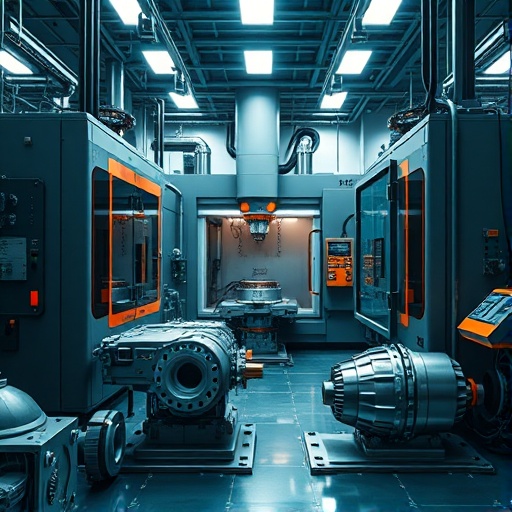
Implementing Quality Control Systems
Effective quality control systems start with layered inspection gates that verify material certificates, in-process dimensions, and final conformance. Operators document every measurement against engineering drawings using calibrated gauges and fixtures. Statistical process control tracks variation trends and triggers corrective actions before defects accumulate. Training programs ensure personnel understand both the standard and the specific aerospace machining services for aerospace requirements. This structured approach minimizes escapes and supports on-time delivery commitments.
Integration with AS9100 further requires formal production process verification and ongoing monitoring of key process variables through capability studies. Digital quality management platforms now capture real-time data from probing systems embedded in CNC machines, automatically populating SPC dashboards and generating alerts when control limits are approached.
Understanding Risks in Aerospace Manufacturing
Risks range from material lot variations and machine tool drift to supply disruptions and regulatory changes. Teams conduct formal failure mode analyses to rank severity and likelihood, then implement controls such as redundant inspection or alternate sourcing. Leadership regularly reviews risk registers during management meetings to keep mitigation plans current. Addressing these factors proactively protects program schedules and prevents costly recalls or grounding events.
Typical risk registers prioritize foreign object debris introduction, tooling breakage during critical features, and supplier process changes that could affect material properties. Mitigation frequently includes redundant CMM checks on key characteristics, tool-life monitoring with automatic replacement, and approved supplier lists that undergo periodic requalification audits.
The Role of CMM in Quality Assurance
Coordinate measuring machines provide non-contact and tactile verification of complex geometries that hand tools cannot reach. Programmers create automated routines that compare scanned data against CAD models and flag any deviation beyond allowable tolerances. CMM reports feed directly into statistical analysis and customer documentation packages. Regular calibration traceable to national standards maintains measurement credibility and supports audit readiness across all machined aerospace parts.
Modern CMMs equipped with scanning probes or laser triangulation heads can capture thousands of points per second, enabling full-surface form analysis on contoured components such as airfoils. Temperature-controlled environments and error-mapping routines ensure sub-micron repeatability even on large gantry-style machines used for wing spars and fuselage frames.
Navigating the Global Supply Chain for Aerospace Machining Services
Challenges in the Aerospace Supply Chain
Global supply chain navigation involves fluctuating raw material prices, export controls, and capacity constraints at specialized vendors. Lead times for certified titanium and Inconel can stretch months when demand spikes. Logistics delays and customs inspections add further uncertainty. Manufacturers counter these pressures by diversifying supplier bases and maintaining strategic inventory buffers for critical alloys.
Geopolitical tensions and mining restrictions on strategic minerals further complicate sourcing, prompting many manufacturers to qualify secondary suppliers in allied nations and pursue long-term offtake agreements that lock in pricing and allocation during periods of high demand.
Finding Reliable Suppliers and OEMs
Selecting capable partners requires thorough capability audits, financial reviews, and site visits. OEMs evaluate machining experience, equipment lists, and past performance on similar programs before issuing purchase orders. AS 9100 certification serves as a baseline filter, yet buyers also examine on-time delivery history and responsiveness to engineering changes. Strong relationships built on transparency help stabilize long-term agreements.
Advanced supplier scorecards track metrics such as quality escape rates, delivery performance, and engineering change responsiveness, with top performers gaining preferred status and volume commitments that support capital investment in new equipment.
Outsourced vs. In-House Machining Solutions
Many prime contractors choose outsourced machining to access specialized expertise and avoid capital investment in niche equipment. External providers often maintain broader material qualifications and faster turnaround on low-volume runs. In-house operations suit high-volume, proprietary designs where control over intellectual property and process know-how remains essential. The decision hinges on volume forecasts, internal skill sets, and strategic priorities.
Hybrid models are increasingly common, with primes retaining critical core processes internally while outsourcing secondary operations to certified partners that can scale capacity rapidly during production ramp-ups.
Future Trends in Aerospace Machining Services
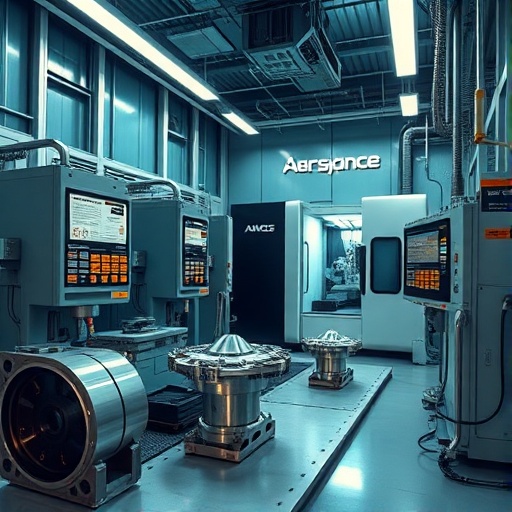
Emerging Technologies in Aerospace Manufacturing
Additive manufacturing hybrids now combine CNC finishing with near-net-shape builds to reduce material waste on large structural components. Artificial intelligence optimizes tool paths in real time, extending cutter life and improving surface integrity. Digital twins allow virtual validation of fixtures and processes before physical setup. These advances accelerate development cycles while preserving the precision demanded by aviation and space applications.
Closed-loop machining systems that integrate in-process probing with adaptive control algorithms are reducing scrap on high-value titanium components, while machine-learning models trained on historical cutting data predict tool wear with increasing accuracy across varying material batches.
The Impact of ITAR on Aerospace Machining
ITAR regulations restrict access to technical data and finished hardware for certain defense-related programs. Certified facilities implement strict access controls, visitor logs, and secure data environments to maintain compliance. Non-U.S. suppliers must navigate licensing requirements that affect collaboration timelines. Understanding these constraints early prevents project delays and protects export privileges.
Compliance programs now incorporate encrypted data vaults, role-based access systems, and regular training audits to ensure employees understand marking requirements for technical data and the consequences of inadvertent disclosure.
Innovations in Aerospace Design and Precision Engineering
Topology optimization software produces organic geometries that traditional machining could not achieve economically. Five-axis and mill-turn centers now handle parts previously assembled from multiple pieces, cutting weight and joint count. Engineers leverage these capabilities to push performance boundaries on next-generation aircraft and rotorcraft. Continuous investment in both technology and workforce skills ensures the industry sustains its trajectory of ingenuity and reliability.
Generative design tools coupled with advanced multi-axis machining are enabling monolithic structures that replace assemblies of dozens of fasteners and brackets, delivering measurable improvements in stiffness-to-weight ratios and reducing potential failure points in primary structure.
See Also
- The Role of AS 9100 Certification in Enhancing Aerospace Manufacturing Excellence
- From Aluminum to Inconel Exploring Materials in Aerospace Machining Services
- Mitigating Risks in Aerospace Projects through Quality Control in Machining
- Navigating the Global Supply Chain for High-Quality Aerospace CNC Machining